
Replacing a roof is a major home project. Knowing a typical timeline in Ohio lets you plan and reduce disruption. This article gives expected durations, a day-by-day overview, common weather impacts, and practical preparation tips so you can keep the job on track.
Key Takeaways

- Residential roof replacements in Ohio typically take 1 to 3 days, depending on size and materials.
- Commercial replacements often run 1 to 3 weeks because of scale and inspections.
- Projects start with inspection and site prep to find issues and clear the area.
- Tear-off, installation, and cleanup are scheduled in sequence for efficiency.
- Ohio weather (rain, snow, extreme temperatures) can delay work.
- Maintain flexible scheduling and clear communication with your contractor to handle delays.
- Clear access and removing vehicles or furniture help minimize disruption.
- Obtain required permits and follow local zoning or HOA rules to avoid delays.
What Is the Typical Roof Replacement Timeline in Ohio?
Timeline depends on roofing material, home size, and weather. Residential jobs are usually a few days; commercial projects may take several weeks. These ranges help homeowners plan and reduce surprises.
GRT Roofing, a regional provider, handles both residential and commercial projects and aims to meet expected timelines with professional care. If you’re also wondering about budget, our guide on how much a new roof costs in Northeast Ohio covers pricing in detail.
How Many Days Does a Residential Roof Replacement Usually Take?
Most residential roof replacements in Ohio take about 1 to 3 days. Exact timing depends on roof size, chosen material, and weather; allow time for preparation and final cleanup. For a detailed look at what the process involves, see our guide to residential roof replacement services in Northeast Ohio.
Factors affecting duration include:
- Roof Size: Larger roofs need more labor and time.
- Material Type: Slate or tile installations are slower than asphalt shingles.
- Weather Conditions: Rain, snow, or extreme temperatures can pause work.
What Is the Expected Duration for Commercial Roof Replacement in Ohio?
Commercial jobs usually take longer — often 1 to 3 weeks — because of multiple roof levels, specialized materials, and inspections. Learn more about GRT’s commercial roofing services in Ohio and how we handle large-scale projects.
Key commercial timeline drivers include:
- Building Size: Larger structures require more time.
- Material Complexity: Specialized materials need skilled crews and extra time.
- Regulatory Approvals: Permits and code checks can extend schedules.
What Are the Day-by-Day Stages of a Roof Replacement Project?

When embarking on a roofing project, understanding the typical stages will not only prepare you mentally but also minimize potential surprises during the process. Every project typically follows a structured approach that includes inspection and preparation, tear-off, installation, and cleanup.
Stage 1: Inspection and Preparation
The initial stage, inspection and prep, is crucial as it involves assessing the existing roof’s condition, identifying any underlying issues, and planning the project scope. During this phase, roofing professionals may recommend repairs or even modifications based on the roof’s structural integrity. As a homeowner, being aware of what to expect during this step can help you ask the right questions and ensure that everything is in place for the next phases of the project.
What Happens During the Roof Inspection and Preparation Day?
Day one usually covers a full inspection and site preparation to identify hidden issues before work begins. A professional roof inspection in Ohio surfaces hidden damage early so it can be addressed before installation. During this stage, the roofing team will:
- Conduct a detailed inspection of the existing roof.
- Remove debris and obstacles from the work area.
- Prepare the site and staging areas for installation.
Proper preparation keeps the installation safe and efficient.
Stage 2: Tear-off
The second stage, tear-off, entails the removal of the old roofing material, which can be a noisy and messy process, but it is essential for a successful installation. According to a CDC/NIOSH health evaluation of roof removal operations, a professional crew can remove a standard residential roof section in one day using proper equipment. A thorough cleanup is often included at this stage to ensure debris is cleared away, leaving a safe environment for workers and residents alike.
How Are Tear-Off, Installation, and Cleanup Scheduled Across Days?
Subsequent days focus on tear-off, installing new materials, then cleanup. Scheduling depends on roof size and crew capacity.
- Tear-Off: The old roofing is removed; this can take a day or two.
- Installation: New materials are installed, typically 1 to 3 days for homes.
- Cleanup: Final cleanup and inspection usually happen on the last day.
This sequence helps complete each phase efficiently so homeowners can resume normal routines quickly.
Stage 3: Roofing Installation
Following the tear-off, the actual installation of the new roofing material takes place. This is where you’ll see your vision come to life as skilled professionals carefully apply the new layers, ensuring everything aligns perfectly for optimal performance and longevity.
Stage 4: Cleanup
Finally, the cleanup stage wraps up the project, ensuring that your property is left in pristine condition. Knowing each of these stages helps you stay informed, anticipate potential challenges, and ultimately results in a smoother roofing experience.
How Do Ohio Weather Conditions Affect Roof Replacement Duration?
Weather in Ohio can delay roofing work. Plan for possible interruptions during wet or severe conditions.
Which Weather Factors Commonly Delay Roof Replacement in Ohio?
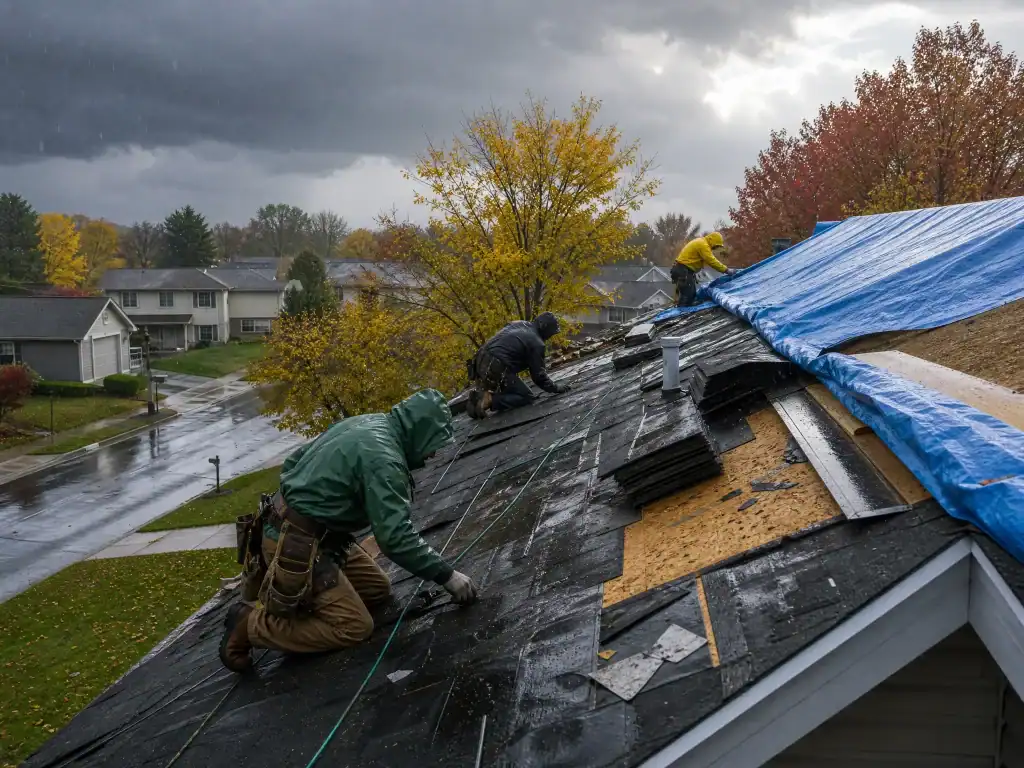
Common weather-related delays include:
- Rain: Wet surfaces are unsafe and can pause work.
- Snow and Ice: Winter conditions often halt roofing activity.
- Extreme Temperatures: Very hot or cold weather can affect material handling and installation.
Schedule work when forecasts are favorable to reduce interruptions.
How Can Homeowners Prepare for Weather-Related Delays?
Steps to prepare for weather delays:
- Flexible Scheduling: Expect timeline shifts tied to forecasts.
- Communication with Contractors: Stay in close contact for schedule updates.
- Site Preparation: Keep access clear so crews can resume quickly when weather improves.
Proactive planning reduces weather impacts on your project. If a storm causes unexpected damage during or between phases, GRT’s storm damage roof repair services can help get your project back on track quickly.
How Should You Prepare Your Property for a Roof Replacement in Ohio?
Preparing your property before work begins minimizes disruption and helps the crew stay on schedule.
What Steps Help Minimize Disruptions During Roof Installation?
To reduce disruption, homeowners should:
- Clear the Area: Move vehicles and outdoor furniture away from the house.
- Provide Access: Ensure crews can reach the roof and staging areas easily.
- Communicate with Neighbors: Let neighbors know about the project and possible noise.
These steps let crews work safely and more efficiently.
What Permits and Regulations Should You Know Before Starting?
Confirm required permits and local rules before work starts to prevent delays.
- Building Permits: Check with local authorities about permit requirements.
- Zoning Regulations: Ensure materials and design meet local zoning rules.
- Homeowner Association Rules: Follow any HOA guidelines that apply.
Knowing permit and zoning requirements helps keep the project compliant and on schedule. Before work begins, it can also help to review our basic roof inspection checklist for homeowners so you know what to expect at each stage.
Conclusion
Understanding the roof replacement timeline in Ohio helps you set expectations and limit disruption. Plan for weather, secure permits, prepare your property, and communicate with your contractor for a smoother project and better results.
Ready to Replace Your Roof?
Get a professional quote for your roof replacement in Ohio from GRT Roofing today. Our experienced team is here to help you plan and execute your project with confidence.
Frequently Asked Questions
What are the common roofing materials used in Ohio?
Common choices are asphalt shingles, metal roofing, slate, and tile. Asphalt is the most affordable and easiest to install; metal is durable and energy efficient; slate and tile last longer but cost more. For a deeper dive into shingle options, see our asphalt shingle roofing materials guide. The U.S. Department of Energy’s cost-effectiveness analysis of ASHRAE 90.1 for Ohio explains how roofing and insulation standards affect energy performance specifically in the Ohio climate. Choose what fits your budget and home style.
How can I choose the right roofing contractor in Ohio?
Research local contractors, read reviews, and verify licensing and insurance. Get multiple quotes, ask for references, and ensure the contract spells out scope, timeline, and warranties.
What should I do if I notice leaks after a roof replacement?
Contact your contractor immediately. Document leaks with photos and dates. Many contractors offer warranties that cover post-installation issues; seek a second opinion if needed. For urgent situations, GRT offers professional roof repair services in Ohio to address issues quickly.
Are there any financial assistance programs for roof replacements in Ohio?
Homeowners may qualify for state or federal grants, low-interest loans, or tax credits for energy-efficient upgrades. Check programs like the Ohio Housing Finance Agency (OHFA) and local non-profits for eligibility and application steps.
What are the signs that I need a roof replacement?
Signs include missing or damaged shingles, heavy granule loss, sagging, and water stains on ceilings. Roofs over about 20 years often need replacement; regular inspections help decide between repair and full replacement.
How can I ensure my roof replacement is energy efficient?
Choose materials with strong energy performance (reflective shingles, metal) and confirm proper insulation and ventilation. Discuss cool-roof options and local code requirements with your contractor.