
Quick answer: Most roofs in Ohio need to be replaced every 20 to 30 years. But you may need a new roof sooner if you see curling shingles, leaks, sagging, or shingle granules in your gutters. Ohio’s freeze-thaw winters and lake-effect snow wear roofs down faster than in milder states, so the smartest first step is a professional roof inspection to know exactly where your roof stands.
How Long Does a Roof Last in Ohio?
Most roofs in Ohio last between 20 and 30 years. The exact number depends on the material you have and how well it was installed and maintained.
Here is what the major roofing materials are expected to last, based on the InterNACHI Standard Estimated Life Expectancy Chart, a trusted home-inspection resource:
- Architectural asphalt shingles: about 30 years
- 3-tab asphalt shingles: about 20 years
- Metal roofing: 40 to 80 years
- EPDM rubber (flat roofs): 15 to 25 years
- Wood shakes: about 25 years
- Slate, clay, or concrete tile: 60 to 100+ years
Keep in mind these are best-case numbers. A roof in Ohio rarely gets “best case” weather. Our winters are hard on shingles. So if your roof is asphalt and getting close to 20 years old, it is wise to start planning. You don’t have to replace it the day it turns 20 — but you should get it checked.
What Are the Warning Signs You Need a New Roof?
Age is only one clue. Your roof will often tell you it is failing long before it fully gives out. Watch for these signs:
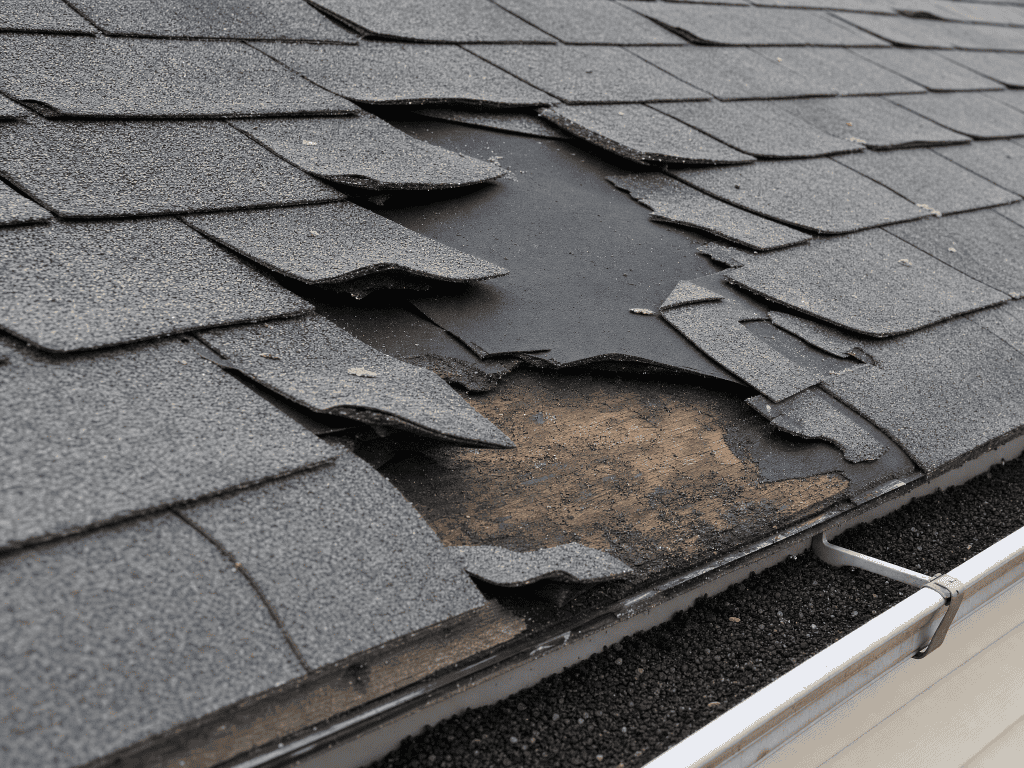
- Curling or buckling shingles. When shingles lift at the edges or bubble in the middle, they can no longer block water.
- Bald spots and lost granules. Find sandy, dark granules in your gutters or downspouts? Those come from your shingles. Once they wear off, the shingle breaks down fast.
- Leaks or water stains. Brown spots on your ceiling or walls mean water is already getting in. This is a strong sign to act now.
- Sagging roofline. A roof that dips or sags may have a rotted or weak deck underneath. This is serious and needs a fast look.
- Daylight through the attic. If you can see light coming through the roof boards, water and cold air can get in too.
- Missing shingles after storms. Ohio storms tear shingles off. A few missing shingles may only need roof repair, but widespread damage often points to replacement.
If you spot two or more of these signs, don’t wait. A small problem on a roof turns into a big, costly one quickly. Booking a professional roof inspection is the safest move.
When Is the Best Time of Year to Replace a Roof in Ohio?
The best time to replace a roof in Ohio is late spring through early fall — roughly May to October. During these months the weather is warmer and drier, which helps shingles seal properly and lets crews work safely.
Here is a quick season-by-season look:
- Spring: Great timing. Mild temperatures and a chance to fix winter damage early.
- Summer: The busiest season. Roofs install well, but crews book up fast, so plan ahead.
- Fall: Often the ideal window. Cool, dry days are perfect for shingle sealing, and you beat the winter rush.
- Winter: Possible, but harder. Cold temps make shingles brittle, and snow causes delays. Emergency work still happens year-round.
If your roof is leaking right now, season doesn’t matter — you need help fast. GRT Roofing offers storm damage repair and 24/7 emergency service across the Cleveland area. For a planned replacement, though, booking in spring or fall usually gets you better scheduling and a smoother job.
How Much Does a Roof Replacement Cost in Ohio?
A new roof in the Cleveland area usually costs between $8,000 and $25,000 for an average home. Your price depends on a few key things:
- Roof size. Bigger roofs need more material and labor.
- Roof pitch and shape. Steep or complex roofs with valleys and dormers cost more to work on.
- Material choice. Asphalt shingles cost less; metal, slate, and tile cost more.
- Old layer removal. Tearing off old shingles adds labor and dump fees.
- Extra features. Skylights, chimneys, and new vents add to the total.
Asphalt shingles remain the most popular choice for Ohio homes because they balance cost, looks, and durability. A full roof replacement is a real investment, but it protects everything under it — and it can raise your home’s value.
Worried about the cost all at once? GRT Roofing offers flexible financing options so you can spread payments out and still get the roof your home needs.
Should You Repair or Replace Your Roof?
Not every roof problem means you need a full replacement. Here is a simple way to decide:
Repair may be enough if:
- Your roof is under 15 years old.
- The damage is in one small spot.
- A single storm caused isolated harm, like a few missing shingles.
Replacement is the better choice if:
- Your roof is 20+ years old.
- You have leaks in more than one place.
- More than a third of the roof is damaged.
- You keep paying for repairs every year.
When repairs start adding up, replacement is often the cheaper choice over time. A trusted roofer will tell you the truth either way. Explore all of GRT Roofing’s roofing services to see how repair and replacement compare for your situation.
How Do Ohio Winters Affect Your Roof?
Ohio winters are tough on roofs, and one of the biggest threats is the ice dam. An ice dam is a ridge of ice that forms at the edge of your roof. It blocks melting snow from draining off, and that trapped water can sneak under your shingles and leak into your home.
According to the U.S. Department of Energy’s Building America program, ice dams form when three things come together: snow on the roof, a poorly sealed or under-insulated attic, and freezing temperatures. Warm air leaks into the attic, melts the snow, and the water refreezes at the cold roof edge.
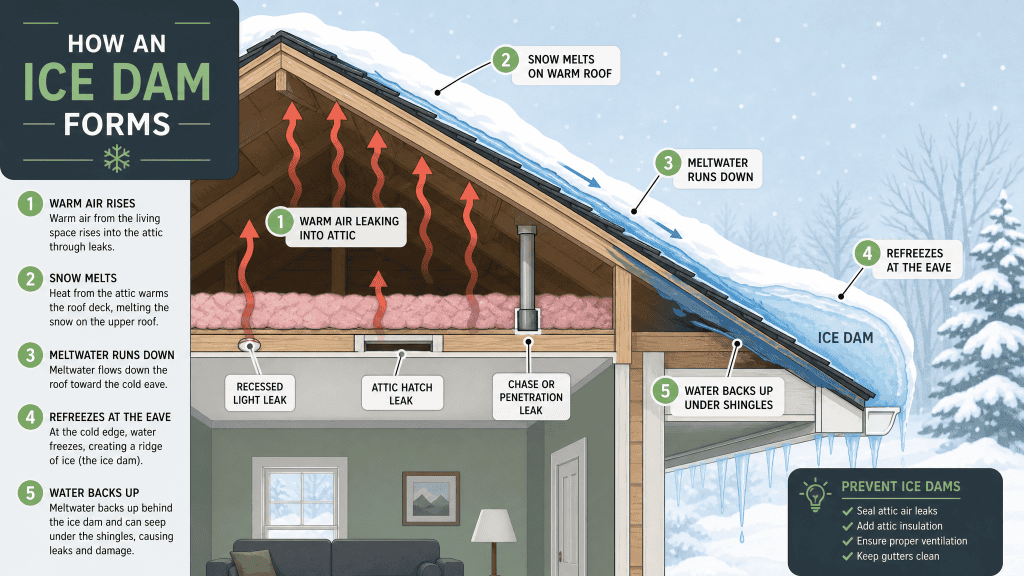
This matters for when to replace a roof in Ohio because repeated freeze-thaw cycles slowly crack shingles and loosen seals. A roof that might last 30 years in a mild climate can wear out years sooner here. Good attic insulation, proper ventilation, and clean gutters all help your roof last longer. If lake-effect snow and ice keep causing problems, it may be time for a new, properly sealed roof.
✅ Conclusion
Here is the short version of when to replace a roof in Ohio:
- Plan for replacement around 20–30 years, sooner for 3-tab shingles.
- Act on warning signs: curling shingles, leaks, sagging, lost granules, or daylight in the attic.
- Best timing: late spring through early fall (May–October).
- Typical cost: $8,000–$25,000, depending on size, pitch, and material.
- Ohio winters speed up wear, especially through ice dams and freeze-thaw cycles.
- When in doubt, get an inspection — it is the only way to know for sure.
Not sure if your roof has years left or needs replacing now? GRT Roofing has served Northeast Ohio and the Greater Cleveland area for over 25 years. We’ll give you an honest assessment — no pressure. Book your free roof estimate today, or learn more about roofing in your town on our Westlake roofing page.
📞 Call (440) 739-7672 for a free, no-obligation inspection.
Frequently Asked Questions
Can you replace a roof in winter in Ohio?
Yes, you can replace a roof in winter in Ohio, but it is harder. Cold weather makes asphalt shingles brittle and slows the sealing process, and snow or ice can cause delays. Experienced crews can still do safe winter installs, and emergency repairs happen year-round. For a planned replacement, late spring through early fall is the better choice.
How long does a roof replacement take?
Most home roof replacements in the Cleveland area take 1 to 3 days. The exact time depends on your roof’s size, its pitch, the weather, and whether old layers need to be torn off. Larger or steeper roofs and surprise repairs to the wood deck can add time.
Does homeowners insurance cover roof replacement in Ohio?
It depends on the cause. Insurance often covers roof damage from sudden events like storms, hail, or fallen trees. It usually does not cover damage from age or lack of maintenance. If a storm hits your roof, document the damage and call a contractor experienced with storm damage repair and insurance claims.
How do I know if my roof is too old to repair?
A roof is usually too old to repair when it is past 20 years, has leaks in several spots, or shows widespread shingle wear like curling and granule loss. If you are paying for repairs every year, replacement is often the smarter long-term choice. A professional roof inspection will give you a clear answer.
What is the most common roofing material in Ohio?
Asphalt shingles are by far the most common roofing material in Ohio. They are affordable, come in many colors, and handle the state’s mixed weather well. Architectural (dimensional) shingles are popular because they last longer and look better than basic 3-tab shingles.